
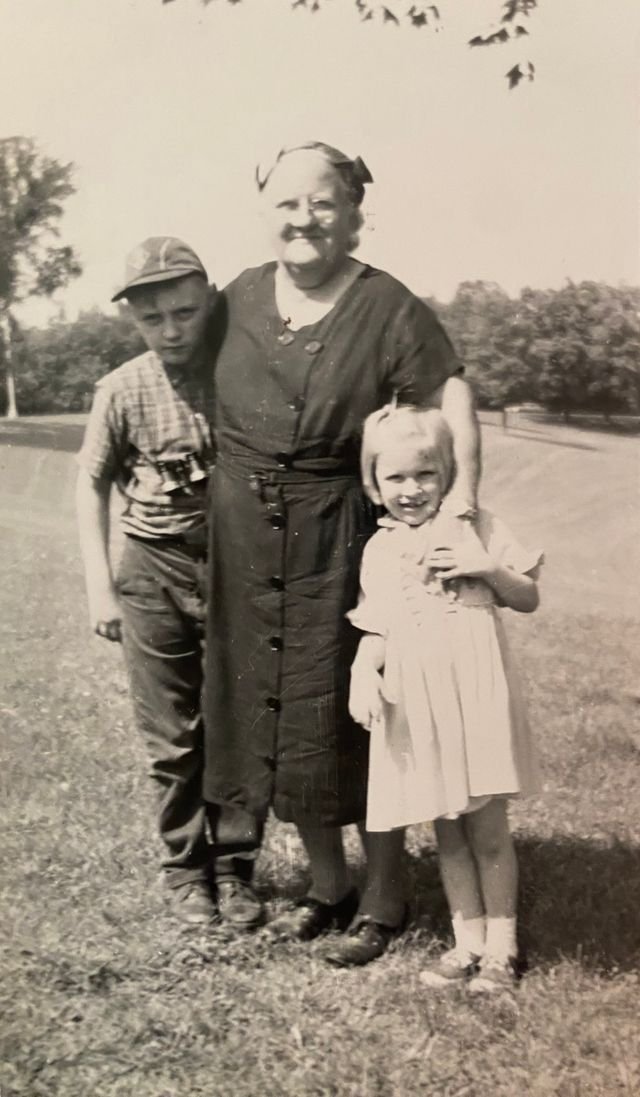
One of my favourite conversations is when somebody confidently announces that autism didn’t exist when they were young.
Five minutes later they’re explaining how they’ve eaten the same breakfast since 1978, refuse to answer unexpected phone calls, know every railway route in Britain, and become visibly distressed if somebody moves their favourite chair.
At which point I find myself wondering whether autism didn’t exist, or whether nobody recognised it.
Now before anybody reaches for the pitchforks, this isn’t an attack on older generations. Quite the opposite. I find the whole thing fascinating because if you’ve spent any amount of time around neurodivergent communities, you’ve probably seen the same pattern unfold.
A child gets diagnosed. Someone starts researching. Similarities begin appearing. Then people start looking at Mum, Dad, Grandad, Uncle Dave, and Great Aunt Margaret who only wore blue jumpers, hated surprises and somehow remembered the exact weather conditions on a random Tuesday in 1983.
Suddenly the family tree starts looking less like a family tree and more like a diagnostic waiting room.
The Myth That Autism Suddenly Appeared
One of the strangest arguments I hear is that autism seems to be everywhere these days. The implication is usually that it must be something new.
Except that’s not really how genetics works.
Autism didn’t suddenly arrive in the 21st century like a surprise Amazon delivery. Autistic people have always existed. What has changed is our understanding of what autism actually looks like.
Years ago, unless somebody had very obvious support needs, they were often given completely different labels. They were described as shy, difficult, quiet, sensitive, eccentric, awkward, gifted or fussy. My personal favourite was always, “There’s nowt wrong with him.”
The traits were there, but the language wasn’t.
The Family Detective Story
One thing that fascinates me about late diagnosis is that it often begins with somebody else.
Very few people wake up one morning and randomly decide to investigate autism. More often than not, it starts with a son, daughter or grandchild. A diagnosis leads to research, and that research starts shining a light on conversations that have existed within families for decades.

“Oh, he’s always been like that.”
“She doesn’t like change.”
“He hates crowds.”
“She’s obsessed with her hobbies.”
“He takes everything literally.”
Then comes the phrase that appears in almost every family conversation.
“We all do that.”
That statement is particularly interesting because when everybody around you shares similar traits, they become invisible. Behaviours that might stand out elsewhere simply become part of normal life.
The problem is that normal isn’t always normal.
Sometimes it’s just familiar.
The Mirror Nobody Wants To Look Into
I think one reason this conversation can become uncomfortable is because it’s much easier to recognise traits in other people than it is in ourselves.
It’s easy to spot patterns in a child. It’s far harder to turn the mirror around and examine your own behaviour.
After all, if a child has just been diagnosed with autism or ADHD, one question quietly appears in the background.
Where did it come from?
Not always. Not exclusively. But genetics certainly has something to say on the matter.
That’s often the point where people begin reassessing behaviours they’ve carried throughout their lives. The routines, sensory sensitivities, social difficulties, intense interests and that lingering feeling of being slightly different without ever understanding why.
What once looked like a collection of personality quirks suddenly begins to look like pieces of a much larger puzzle.
The Late-Life Revelation
This is one of the reasons so many people are discovering their neurodivergence later in life.
Not because they suddenly became autistic.
Not because social media convinced them they were autistic.
And certainly not because autism has become fashionable.
For many people, this is simply the first time they’ve had access to information that previous generations never received.
The diagnosis isn’t creating the traits. It’s explaining them.
For some people, that explanation can be life-changing.
Imagine spending fifty years believing you’re lazy before discovering you have ADHD.
Imagine spending decades believing you’re socially broken before discovering you’re autistic.
Imagine carrying shame for behaviours you never understood, only to discover there was a reason behind them all along.
That doesn’t excuse everything. It isn’t a free pass. But it does provide something incredibly powerful.
Context.
And context changes everything.
Maybe We’re Asking The Wrong Question
Perhaps the real question isn’t:
“Why are so many people being diagnosed now?”
Perhaps the better question is:
“How many people were missed?”
Because when I look around, I don’t see a world that has suddenly become full of neurodivergent people. I see a world that is finally developing the language to describe people who have always been here.
People who were labelled awkward.
People who were labelled difficult.
People who were labelled weird.
People who spent decades wondering why they never seemed to fit the mould everyone else appeared to follow so effortlessly.
Maybe that’s why so many older adults are having their own moments of revelation.
A grandchild gets diagnosed. Then a child. Then a sibling.
And suddenly they’re staring into the family mirror thinking:
“Hang on a minute…”
Maybe autism did exist in my day after all.
Maybe nobody noticed.
Or perhaps more accurately, nobody knew what they were looking at.
Have you ever learned something about neurodivergence that suddenly made your own family history make a lot more sense?