I was having a really fascinating conversation recently with someone who also had autism. At one point, they admitted something that felt almost socially illegal to say out loud.
They confessed that sometimes they struggle more with certain neurodivergent people than neurotypical ones.
Not because they lacked compassion.
Not because they thought they were “better”.
But because some interactions felt like trying to communicate across planets.
They explained that some autistic or ADHD people they met seemed completely unlike them. Different communication depth. Different self-awareness. Different emotional intensity. Different conversational needs.
And strangely, instead of creating comfort through shared experience, it sometimes created friction.
That conversation sat with me for days.
Because ironically, I realised I’d already touched on this topic before in an older article about why ADHD behaviour can trigger us. But back then, I do not think I fully understood what I was actually trying to say.
Now I think I do.
I do not think neurodivergent people necessarily clash because they are cruel, impatient or intolerant.
I think sometimes we clash because we accidentally force each other to confront the very traits we spend our whole lives trying to manage in ourselves.
Shared Diagnosis Does Not Mean Shared Personality
One of the biggest myths online is the idea that neurodivergent people naturally understand each other better.
Sometimes they do.
Sometimes it is like finally meeting someone who speaks your native language after years of social jet lag. The relief is instant. The conversation flows. Nobody has to explain why supermarket lighting feels like an interrogation lamp from a crime drama.
But other times?
It feels like psychological Velcro being rubbed the wrong way.
Because ADHD and autism are not personalities. They are neurotypes. Two people can technically share the same diagnosis while having completely different communication styles, emotional needs, coping mechanisms and levels of self-awareness.
One autistic person may crave calm, structure and direct communication.
Another may interrupt constantly, speak intensely and dominate conversations without realising.
One ADHD person may be emotionally insightful and deeply reflective.
Another may leap from topic to topic like an escaped kangaroo wearing roller skates.
Diagnosis alone does not create compatibility.
And honestly, I think many neurodivergent people quietly feel guilty admitting this.
The Mirror Effect Nobody Talks About
The more I thought about it, the more I realised something uncomfortable.
Many neurodivergent people are not just reacting to the other person.
They are reacting to a mirror.
Sometimes the traits that trigger us most are the ones we are desperately trying to manage in ourselves.
That is where things get psychologically messy.

For example:
- An autistic person who works hard to avoid dominating conversations may become deeply irritated by someone who monologues endlessly.
- A heavily masked ADHD person may feel exhausted around someone impulsive and chaotic.
- Someone who values precision and nuance may struggle with black-and-white thinking or misinformation.
- A person who constantly regulates their emotional reactions may feel overwhelmed around dysregulated behaviour.
The irritation is not always superiority.
Sometimes it is recognition.
And recognition can feel deeply uncomfortable.
Why Small Talk Can Feel Physically Painful
This also made me realise why I struggle so much with small talk.
I have always found surface-level conversations exhausting. If I cannot have a meaningful conversation with someone, my brain starts searching for the nearest emotional fire exit.
For years, I questioned whether this made me judgemental, too serious or emotionally rigid.
Maybe it still does sometimes.
But I also think many autistic people experience conversation differently from neurotypical people.
For some of us, conversation is not just social glue.
It is connection.
It is stimulation.
It is how we locate meaning and safety in another person.
Small talk can feel oddly performative. Like everybody is following a social script nobody genuinely enjoys, yet everyone keeps acting as though discussing the weather is somehow the gateway to intimacy.
Meanwhile, meaningful conversation creates focus.
You can practically feel the brain switch on.
Suddenly there is energy.
Curiosity.
Engagement.
Depth.
That does not mean people who enjoy lighter conversation are shallow.
It simply means some brains require a different level of conversational intensity to feel connected.
And I think that distinction matters enormously.
The Dangerous Trap of Intellectual Superiority
Now here comes the uncomfortable bit.
There is a fine line between craving depth and developing superiority.
And if we are being honest, some neurodivergent people absolutely fall into that trap.
Particularly those who built their identity around being “the smart outsider”.
Sometimes frustration with others is not actually about communication style.
Sometimes it is ego.
Sometimes it is impatience.
Sometimes it is intellectual snobbery wearing a therapy jumper.
That is worth acknowledging honestly.
Because intelligence itself is wildly uneven.
The highly analytical autistic person may struggle emotionally.
The socially awkward ADHD person may be creatively brilliant.
The quiet person in the corner may possess extraordinary emotional intelligence despite struggling academically.
Human capability is not linear.
And what one person interprets as “lack of depth” may actually be:
- anxiety
- masking
- different communication priorities
- slower processing
- social caution
- trauma
- or simply a different kind of intelligence entirely
That is why this topic needs nuance.
Why Some Neurodivergent People Feel “Different” From Other ND People
I think this is the part many people are quietly trying to understand.
Some neurodivergent individuals do not relate to the online stereotypes at all.
They meet other ADHD or autistic people and think:
“Why do I feel so different from you?”
And sometimes that difference can feel isolating.
Especially online, where neurodivergence is often presented as one giant relatable club full of shared behaviours and inside jokes.
But the reality is far more complicated.
Some autistic people are highly verbal.
Others are not.

Some ADHD people thrive in chaos.
Others are destroyed by it.
Some people crave routine.
Others suffocate under it.
Some communicate emotionally.
Others communicate analytically.
Some are sensory seekers.
Others are sensory avoiders.
There is no single neurodivergent personality.
And honestly, I think people sometimes underestimate how much intelligence, upbringing, trauma, emotional maturity and self-awareness shape behaviour beyond diagnosis itself.
Are We Sometimes Too Accepting of Harmful Behaviour?
This is another difficult conversation people often avoid.
In some spaces, neurodivergence has become so heavily romanticised that accountability gets quietly erased.
Understanding someone’s brain should create compassion.
But it should not eliminate boundaries.
There is a difference between:
“I struggle with this”
and:
“Everybody else must endlessly absorb the consequences of it.”
You are allowed to feel exhausted by emotionally one-sided relationships.
You are allowed to dislike being interrupted constantly.
You are allowed to feel hurt when somebody repeatedly dismisses your needs.
Compassion should not require self-erasure.
And equally, frustration should not become cruelty.
That balance matters.
Maybe We Are Looking for Ourselves in Other People
The more I reflected on all this, the more I realised something else.
Perhaps many neurodivergent people unconsciously search for replicas of themselves.
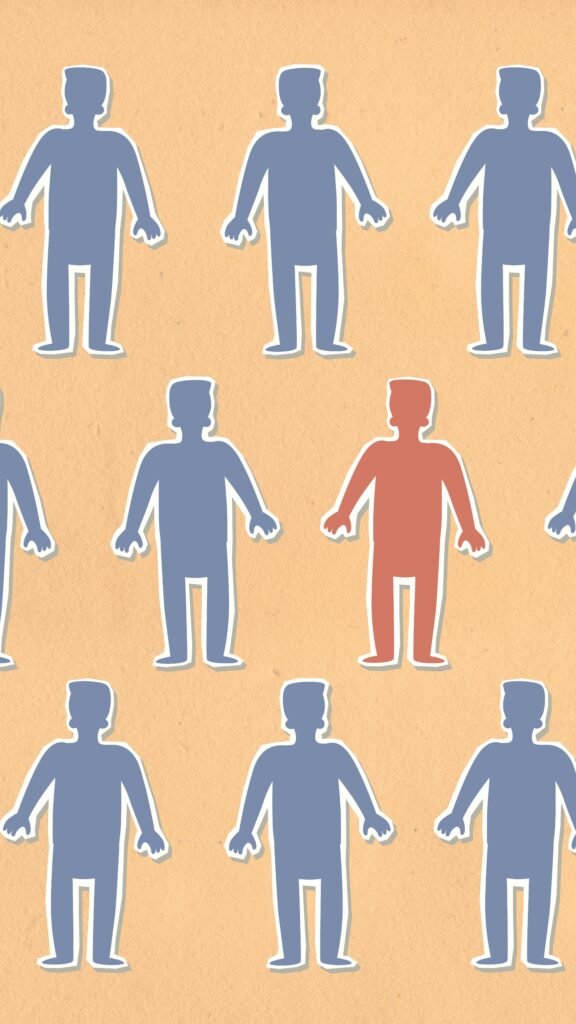
We assume shared diagnosis means shared worldview.
Shared emotional depth.
Shared humour.
Shared conversational style.
And when that fantasy collapses, disappointment appears.
But maybe the point of human connection is not to find identical minds.
Maybe it is to learn how wildly different minds can still connect meaningfully.
That does not mean forcing yourself into draining friendships.
Nor does it mean pretending every interaction fulfils you.
But it may mean recognising that not everybody expresses value through intense conversation or intellectual depth.
Some people offer warmth.
Some offer stability.
Some offer humour.
Some offer loyalty.
Some offer gentleness.
And perhaps part of maturity is learning the difference between:
“This person has nothing to offer me”
and:
“This person offers something different from what I naturally seek.”
That is a very uncomfortable distinction to sit with.
The Real Question Beneath It All
I do not think the real question is:
“Why do neurodivergent people annoy each other?”
I think the real question is:
“Why do some people feel emotionally and cognitively safe to us, while others drain us completely?”
Because underneath all of this sits something deeply human.
The desire to feel understood.
Not just diagnosed.
Not just categorised.
Not just grouped together under one neurological umbrella.
But genuinely understood.
And perhaps that is why some neurodivergent relationships feel electric, while others feel like trying to tune an old radio with broken knobs.
Same category.
Completely different frequency.
So maybe the goal is not to force ourselves to like everybody equally.
Maybe the goal is to understand why certain people activate us so intensely in the first place.
And maybe, just maybe, some of the traits we struggle to tolerate in others are the exact traits we have spent our entire lives trying to regulate within ourselves.
The mirror is rarely comfortable.
But it is often revealing.
What do you think? Have you ever met someone with the same diagnosis as you, yet felt like you were living on entirely different planets?
Here is another great read from the ND Identity Series